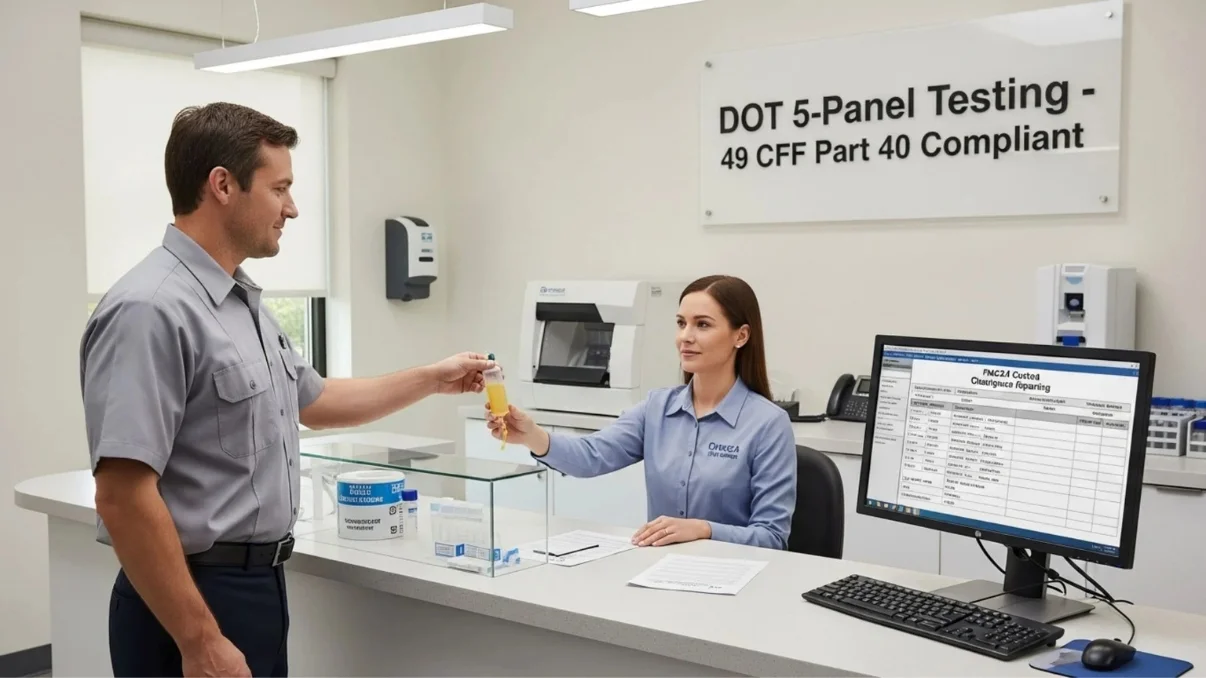

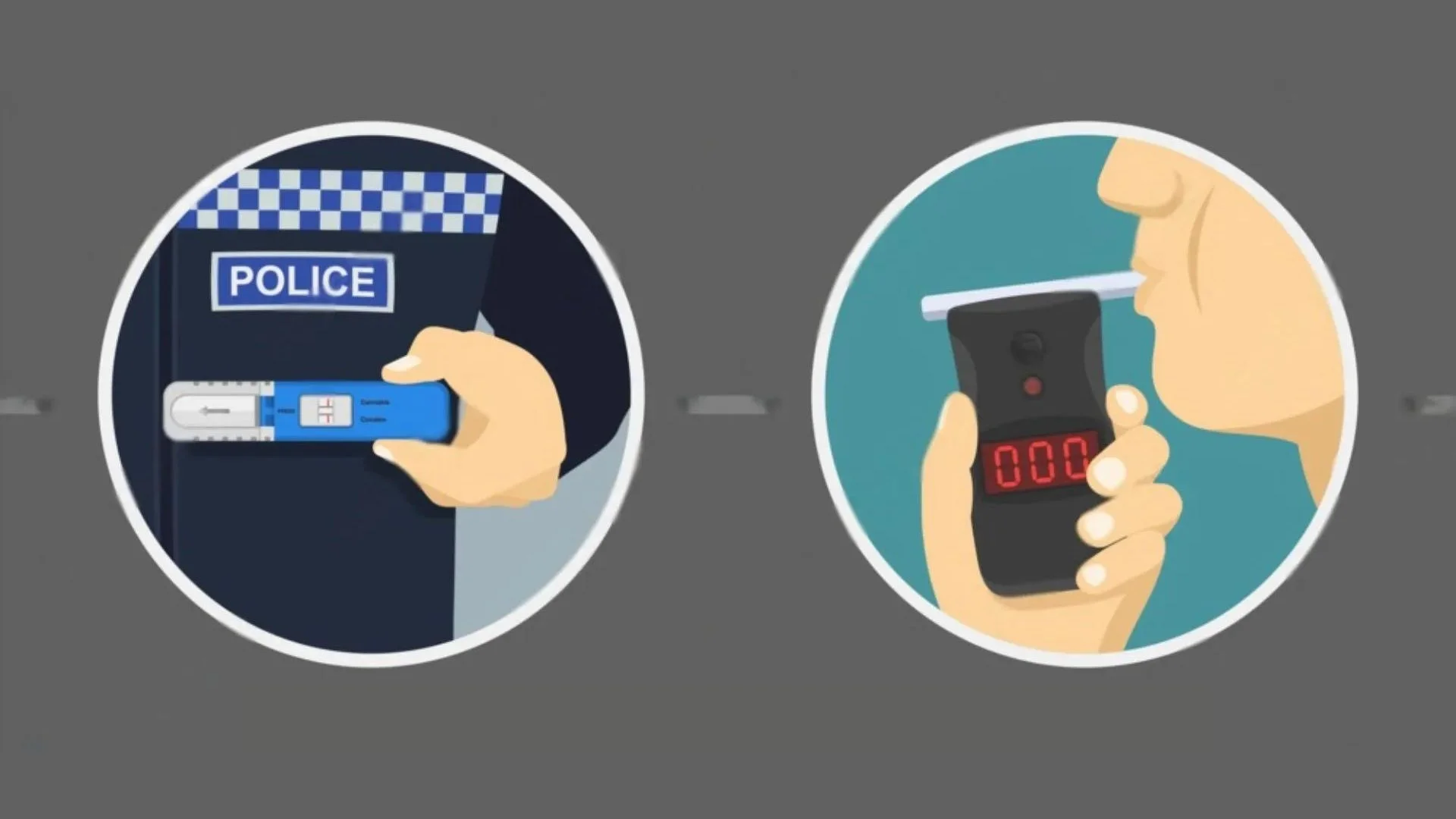
Random drug and alcohol testing is one of the most important requirements for safety-sensitive employees regulated by the U.S. Department of Transportation (DOT). Employers and owner-operators must understand how frequently random testing is required to maintain compliance, avoid penalties, and ensure workplace safety.
Whether you manage a trucking company, operate a fleet, or work as an owner-operator, understanding DOT random drug and alcohol testing requirements can help you stay compliant and avoid costly violations.
What Is Random Drug and Alcohol Testing?
Random drug and alcohol testing is a DOT-mandated testing program designed to deter substance abuse among safety-sensitive employees. Drivers are selected through a scientifically valid random process, giving every covered employee an equal chance of being tested each time selections are made.
The purpose of random testing is to identify prohibited drug or alcohol use before it creates safety risks on the road. Learn about all six types of DOT drug testing and how they differ from non-DOT programs.
Who Must Participate in Random Testing?
DOT random testing requirements apply to safety-sensitive employees, including commercial truck drivers with a CDL, bus drivers, transit operators, railroad employees, aviation workers, pipeline workers, and maritime employees.
For trucking companies regulated by the Federal Motor Carrier Safety Administration (FMCSA), all CDL drivers performing safety-sensitive functions must participate in a random testing program. Review the full list of covered employees and which DOT agency governs their testing requirements.
How Frequently Is Random Drug Testing Required?
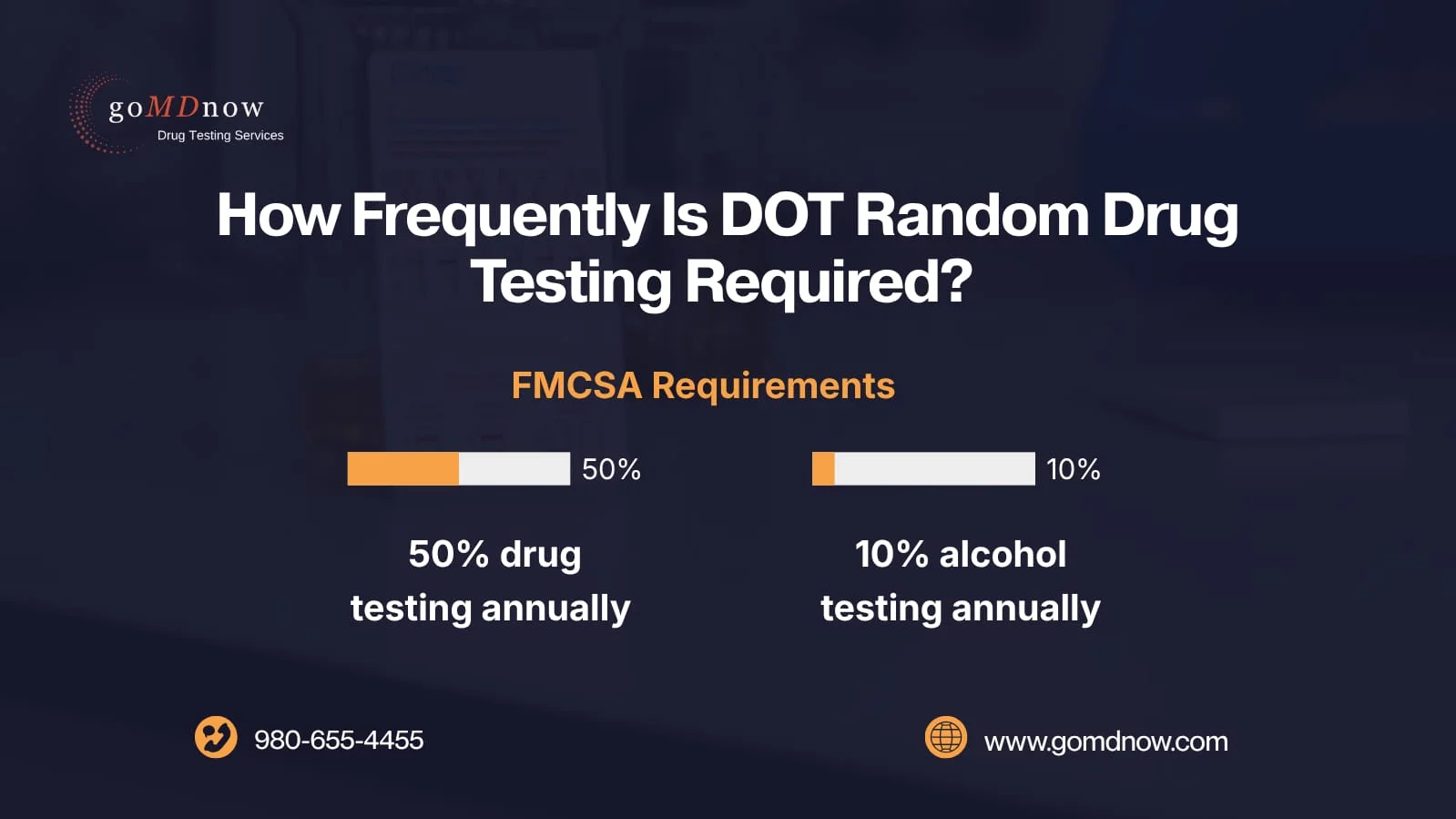
The DOT does not specify a fixed monthly or quarterly testing schedule for individual drivers. Instead, employers must conduct random selections throughout the calendar year and meet minimum annual testing rates. These rates vary by DOT agency.
2026 Random Drug Testing Rates by DOT Agency
| DOT Agency | Drug Testing Rate | Alcohol Testing Rate |
|---|---|---|
| FMCSA (trucking/buses) | 50% | 10% |
| FAA (aviation) | 25% | 10% |
| FTA (transit) | 50% | 10% |
| FRA (railroad) | 25% (operating crew) / 50% (maintenance) | 10% |
| PHMSA (pipeline) | 50% (increased from 25% in 2025) | N/A for random |
| USCG (maritime) | 50% | N/A for random |
For example, if an FMCSA-regulated company has 100 covered drivers: at least 50 random drug tests and at least 10 random alcohol tests must be completed each year. Selections must be spread reasonably throughout the year rather than clustered in one period.
Note: FMCSA has the authority to reduce drug testing rates to 25% if the industry-wide positive rate falls below 1.0% for two consecutive calendar years. PHMSA raised its rate from 25% to 50% effective January 1, 2025 after industry data showed positive rates exceeding the 1% threshold, and this rate continues for 2026.
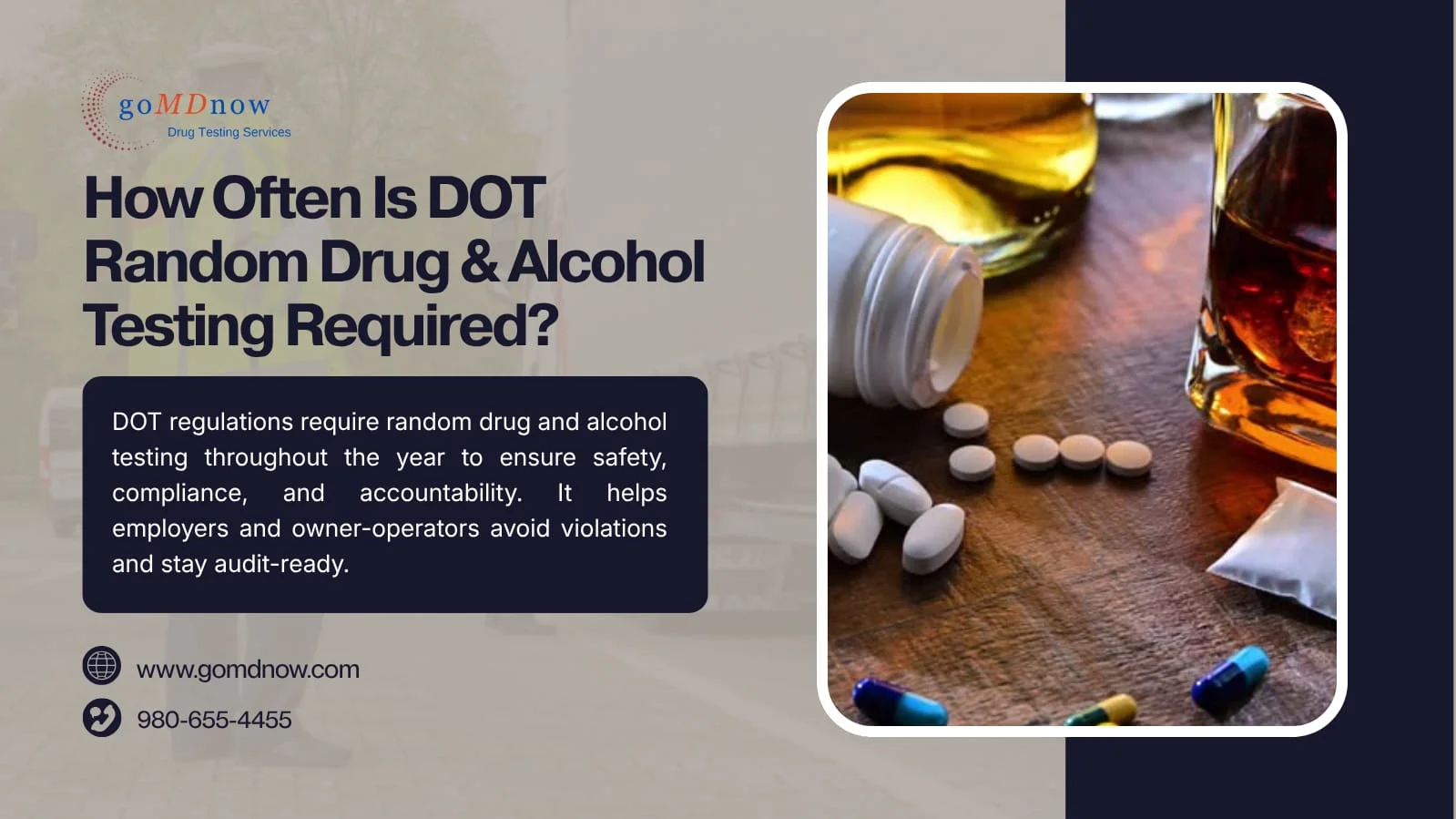
How Are Drivers Selected for Random Testing?
Random selections must be made using a scientifically valid method, such as computer-generated random selection software, third-party consortium random pools, or independent random number systems. The process must ensure that every employee has an equal chance of being selected during each testing cycle.
A driver may be selected multiple times a year or not at all this unpredictability is a key element of an effective random testing program. Understand the difference between a DOT random testing pool vs. a stand-alone pool.
When Must Random Drug Testing Be Performed?
Once notified of selection, employees must proceed immediately to the testing site. Delaying, refusing, or failing to appear for testing may be considered a refusal to test, which can lead to serious DOT consequences. Random drug tests can be conducted before work, during work hours, or after completing safety-sensitive duties. The timing should remain unpredictable to maintain program effectiveness.
When Must Random Alcohol Testing Be Performed?
Random alcohol testing has stricter timing requirements. Alcohol tests must be conducted just before performing safety-sensitive duties, during safety-sensitive duties, or immediately after safety-sensitive duties. Alcohol testing cannot be conducted when the employee is off duty and has not recently performed safety-sensitive functions. See our guide on why FMCSA requires random alcohol testing for full context.
What Happens If a Driver Refuses a Random Test?
A refusal to test is treated similarly to a positive test result. Examples of refusals include failing to appear for testing, leaving the testing site before completion, not providing an adequate specimen without a valid medical reason, and refusing to follow testing instructions.
Consequences include immediate removal from safety-sensitive duties, required SAP evaluation, return-to-duty testing requirements, and Clearinghouse reporting. See what qualifies as a DOT violation and the full consequences that follow.
Why Does DOT Require Random Testing?
Improve Road Safety
Drivers operating commercial vehicles must remain alert and capable of making safe decisions. Random testing helps reduce the risk of impaired driving.
Prevent Substance Abuse
The possibility of being selected at any time discourages prohibited drug and alcohol use including marijuana, which remains prohibited for CDL drivers regardless of state legalization.
Protect Employers
Maintaining compliance helps companies avoid regulatory penalties and legal liabilities. See the most costly compliance failures that get trucking companies fined $5,000+.
Support Public Safety
Random testing contributes to safer highways and protects motorists, passengers, and communities.
Common Compliance Mistakes Employers Should Avoid
Conducting Selections Too Infrequently
Random selections should occur throughout the year rather than once or twice annually.
Missing Required Testing Percentages
Employers must meet the annual testing rates for their specific DOT agency not just FMCSA rates.
Using Non-Compliant Selection Methods
Manual selection methods that do not provide equal probability can create compliance issues and audit failures.
Poor Documentation
Testing records, selection reports, and compliance documentation must be maintained properly. Proper chain of custody documentation is essential for audit readiness.
Delayed Notifications
Employees should be notified promptly after selection and proceed to testing immediately.
Benefits of Joining a Random Testing Consortium
Many owner-operators and small fleets join a DOT random testing consortium to simplify compliance. Benefits include automated random selections, compliance recordkeeping, testing coordination, regulatory support, reduced administrative burden, and FMCSA-compliant program management.
Consortium enrollment is often the easiest solution for businesses that do not have enough drivers to manage an internal random testing pool. Learn why every DOT employer needs a TPA or C/TPA to manage these obligations efficiently.
Why Choose goMDnow for DOT Random Testing?
goMDnow provides reliable DOT drug and alcohol testing solutions for owner-operators, fleets, and transportation companies across the United States. With goMDnow, you get DOT-compliant random testing programs, consortium enrollment services, nationwide testing locations, FMCSA compliance support, drug and alcohol testing management, Clearinghouse assistance, and fast professional service.
Whether you operate one truck or an entire fleet, explore our drug testing pricing or contact us today.
Final Thoughts
Random drug and alcohol testing is a critical part of DOT compliance. FMCSA-regulated employers must meet the 50% drug and 10% alcohol annual testing rates, conduct scientifically valid random selections, and maintain proper records throughout the year. Other DOT agencies have their own rates employers should always verify the rates applicable to their specific regulatory agency.
Understanding how often random testing is required can help employers avoid violations, protect their workforce, and promote safer roads. Partnering with a trusted compliance provider like goMDnow can simplify the process and ensure your testing program remains fully compliant with DOT regulations.
FAQs
1. How often can a CDL driver be randomly tested?
A CDL driver can be selected multiple times a year or not at all. Random selections are based on chance through a compliant random testing program no driver is guaranteed one test before another is re-selected.
2. What is the current FMCSA random drug testing rate?
FMCSA requires annual random drug testing of 50% of covered drivers and alcohol testing of 10%. These rates have remained consistent since 2020. Other agencies have different rates FAA at 25%, FTA at 50%, and PHMSA increased to 50% effective January 1, 2025.
3. Can an employee refuse a random DOT test?
No. Refusing a DOT random test is treated as a testing violation and may result in removal from safety-sensitive duties, Clearinghouse reporting, and mandatory SAP evaluation.
4. Are owner-operators required to participate in random testing?
Yes. Owner-operators must participate in a DOT-compliant random testing consortium to meet FMCSA requirements. They cannot manage their own random pool as a single-driver operation.
5. Why are random drug and alcohol testing important?
Random testing helps prevent substance abuse, improves safety, supports compliance, and reduces the risk of accidents. The unpredictability of selection is what creates the deterrent effect.